
Introduction
With rising electricity costs and increasing awareness of renewable energy, solar power has become one of the most reliable and cost-effective energy solutions for homes and businesses. India receives abundant sunlight throughout the year, making solar energy a practical long-term investment.
In this guide, we will explain how a solar power system works, its main components, different system types, and why solar energy is a smart choice for residential and commercial use.
What Is a Solar Power System?
A solar power system is a setup that converts sunlight into usable electricity. It uses solar panels to capture solar energy and other components to convert, regulate, and distribute electricity to power your appliances.
A well-designed solar system can significantly reduce electricity bills and provide clean, sustainable energy for decades.
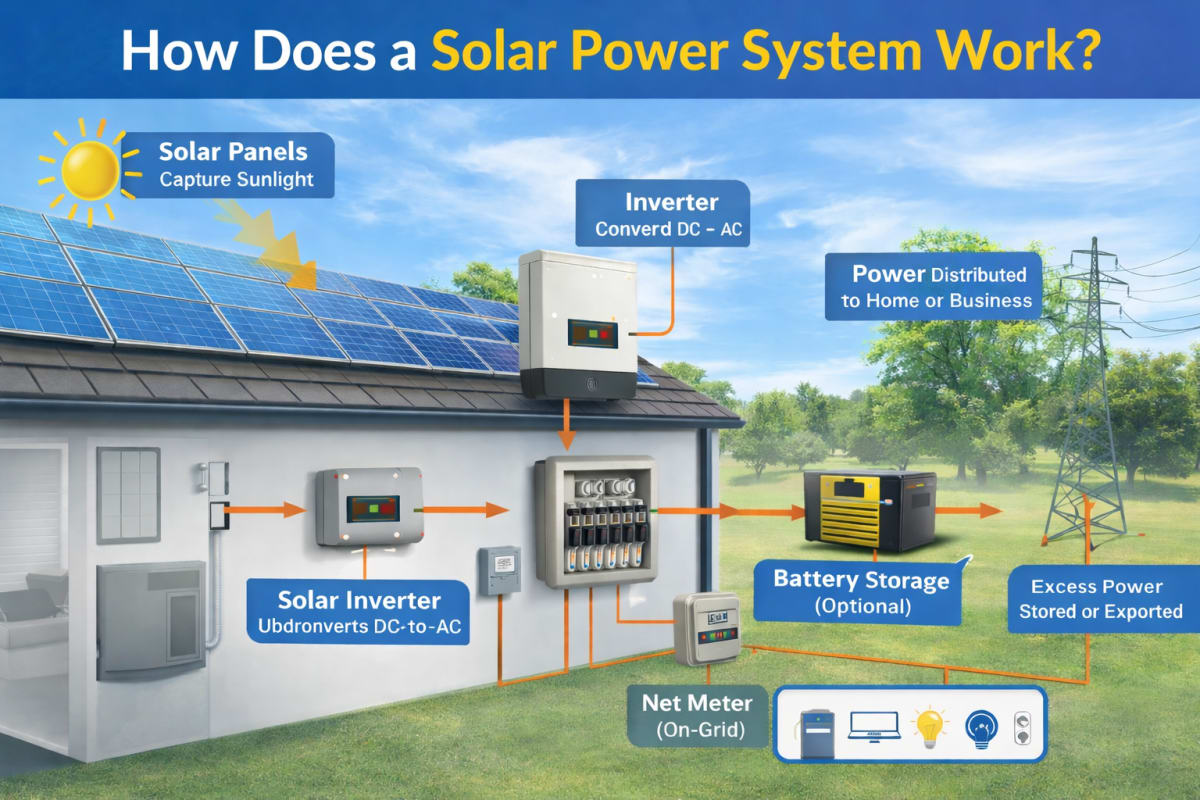
How Does a Solar Power System Work? (Step-by-Step)
1. Solar Panels Capture Sunlight
Solar panels are made of photovoltaic (PV) cells, usually composed of silicon. When sunlight hits these cells, it excites electrons and generates Direct Current (DC) electricity.
2. DC Electricity Is Sent to the Inverter
The electricity generated by solar panels is DC power. Since most household appliances use Alternating Current (AC), the DC electricity is transferred to a solar inverter.
3. Inverter Converts DC to AC
The inverter converts DC electricity into AC electricity, making it suitable for powering lights, fans, air conditioners, refrigerators, and other appliances.
4. Power Is Distributed to Your Home or Business
Once converted, electricity flows through the electrical distribution panel and supplies power to your building in real time.
5. Excess Energy Is Stored or Exported
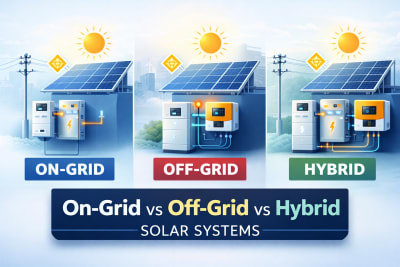
- On-grid systems export excess power to the electricity grid
- Off-grid systems store extra energy in batteries
- Hybrid systems use both grid export and battery storage
Main Components of a Solar Power System
Solar Panels
Solar panels are the core of the system. Their efficiency and quality directly affect overall power generation.
Solar Inverter
The inverter not only converts power but also monitors system performance and ensures safe operation.
Mounting Structure
Mounting structures securely hold solar panels on rooftops or ground installations and are designed to withstand wind and weather conditions.
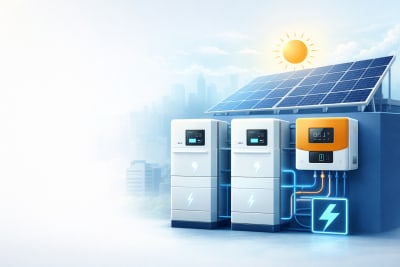
Batteries (For Off-Grid and Hybrid Systems)
Batteries store unused solar energy for use during nighttime or power outages.
Net Meter (For On-Grid Systems)
A net meter tracks electricity imported from and exported to the grid, helping calculate energy credits.
Types of Solar Power Systems
On-Grid Solar System
- Connected to the electricity grid
- No battery storage
- Lower installation cost
- Best for areas with reliable grid supply
Off-Grid Solar System
- Completely independent of the grid
- Requires battery storage
- Ideal for remote or rural areas
Hybrid Solar System
- Combines grid connection and battery backup
- Ensures uninterrupted power
- Higher initial cost but maximum reliability
Benefits of Installing a Solar Power System
- Significant reduction in electricity bills
- Long-term financial savings
- Low maintenance requirements
- Environment-friendly energy source
- Increased property value
Who Should Consider Solar Power?
Solar power systems are suitable for:
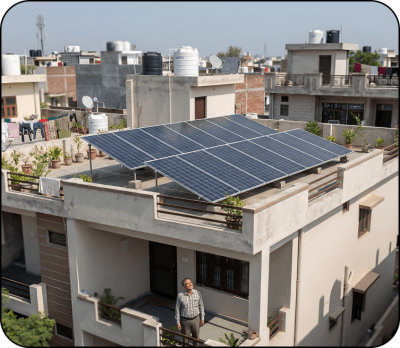
- Residential homes
- Commercial buildings
- Industrial units
- Educational institutions
- Hospitals and healthcare facilities
Conclusion
A solar power system is a smart investment for anyone looking to reduce electricity costs and adopt clean energy. By understanding how solar systems work and choosing the right configuration, you can enjoy reliable power for 25 years or more while contributing to a greener future.